

|
 |
Recorded in San Jose, California
December 2, 2000
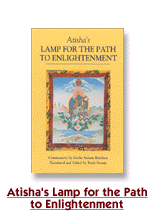
Atisha, the eleventh-century Indian Buddhist scholar and saint, came to Tibet at the invitation of the king of Western Tibet, Lha Lama Yeshe Wö, and his nephew Jangchub Wö. His coming initiated the period of the "second transmission" of Buddhism to Tibet, formative for the Sakya, Kagyu and Gelug traditions of Tibetan Buddhism. Atisha's most celebrated text, entitled Lamp for the Path to Enlightenment, sets forth the entire Buddhist path within the framework of three levels of motivation on the part of the practitioner. Atisha's text thus became the source of the Lam Rim tradition, or graduated stages of the path to enlightenment, an approach to spiritual practice incorporated within all schools of Tibetan Buddhism.
Lamp for the Path - English & Tibetan
click here to download a free copy of Adobe Acrobat
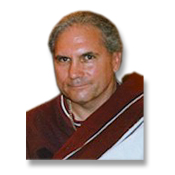
Ngawang Chotak (a.k.a. Chris Kolb) is a well-known and respected teacher of Buddhist meditation and philosophy. He has been a student of Mahayana Buddhism for over thirty years and currently teaches at Tse Chen Ling Buddhist Center in San Francisco. Chotak also serves as a project assistant at San Francisco General Hospital and chemical dependency counselor in private practice. He is especially skilled at addressing the concerns of Western students and his teachings are at once profound and accessible.